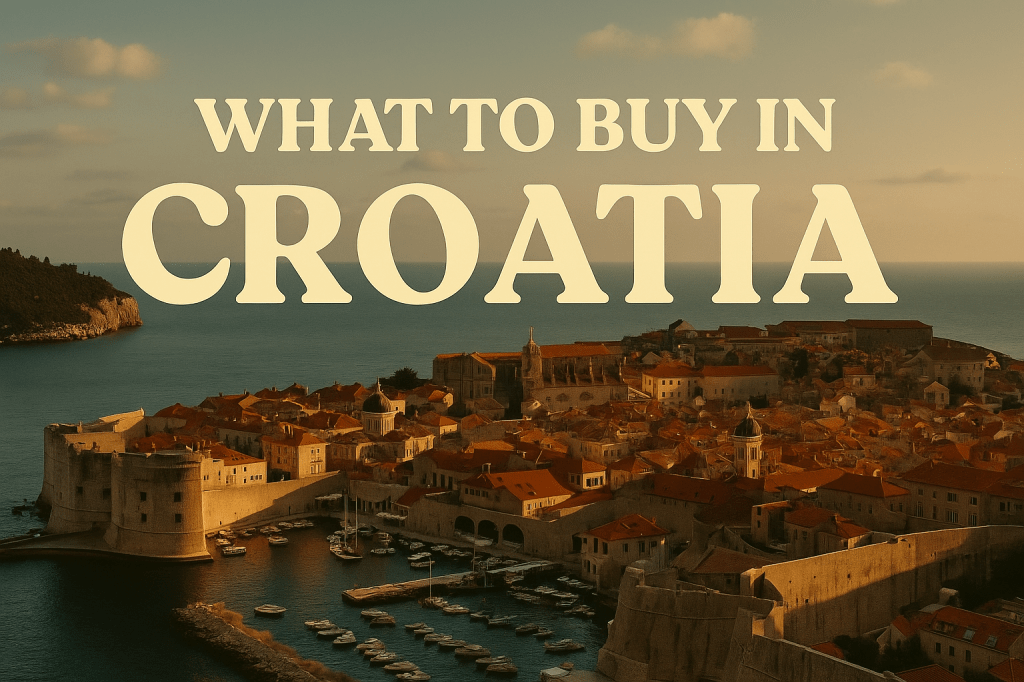
From the sun-bleached limestone terraces of Istria to the fragrant lavender fields of Hvar and the salty spray off Dubrovnik’s city walls, Croatia smells of olive oil, sea and sun-baked stone. Markets hum with fishermen’s calls, artisans carve olive wood in the shade of cypress trees, and every island seems to keep its own small treasure.
Whether you’re hunting for Croatian souvenirs, edible delights, or hand-made keepsakes, every region delivers something beautifully rooted in place. Here’s what to buy in Croatia to bring a piece of its coastal charm home with you.
1. Paški sir (Pag cheese)
Why pick this up: Paški sir is a sharply savory sheep’s cheese made on the windswept island of Pag; its salty, nutty bite captures the island’s aromatic herbs and salty air.
What to look for: Aged (stariji) versions are crumbly and complex; look for PDO labelling and ask about the farmhouse (proizvodnja) to ensure authenticity.
Price bracket (2025): €8–€35 for wedges (small tasting pieces up to larger blocks).
Where to find it: Pag markets, Split’s Green Market (Pazar), and specialty deli shops across Dalmatia.
2. Istrian extra virgin olive oil
Why pick this up: Istria’s hilly groves produce some of Europe’s cleanest, peppery oils—a true taste of Croatia that brightens salads and grilled fish.
What to look for: Cold-pressed, early harvest oils with a fruity aroma and peppery finish; look for a Zlatna Maslina award or Istrian producer names like Buža or Krašić.
Price bracket (2025): €10–€45 for 250–500 ml bottles (premium estate bottles can be €60+).
Where to find it: Olive oil mills around Motovun and Rovinj, farmers’ markets, and gourmet shops in Zagreb and Split.
3. Hvar lavender and essential oils
Why pick this up: Hvar’s hot, dry hills produce compact, aromatic lavender famed for its perfume and calming scent—an ideal, lightweight souvenir.
What to look for: Pure essential oils or dried lavender bundles (provance-style bunches); check for locally made soaps and linen sachets.
Price bracket (2025): €4–€30 (sachets, small oils, soaps).
Where to find it: Hvar Town’s craft stalls, Stari Grad markets, and island distilleries.
4. Maraschino liqueur (Maraska)
Why pick this up: A distinctive cherry liqueur from Zadar and its surrounding islands—botanically fragrant and historically tied to Dalmatian courts.
What to look for: Traditional Maraska bottles labeled “Maraschino” or producers like Maraska (Zadar); clear, floral aroma with a bittersweet finish.
Price bracket (2025): €12–€30 per bottle.
Where to find it: Zadar shops, duty-free at airports, and liquor stores in Split and Dubrovnik.
5. Rakija (fruit brandy)
Why pick this up: Rakija—pear, plum (šljivovica), or quince—captures home-distilled Croatian warmth; it’s the drink of celebrations and tavern hospitality.
What to look for: Small-batch, artisanal bottles from family producers; flavored varieties like medica (honey) or travarica (herbal).
Price bracket (2025): €8–€40 depending on age and provenance.
Where to find it: Local konobas (taverns), rural markets, and specialty liquor shops across the country.
6. Filigree silver jewelry
Why pick this up: Delicate filigree work—fine silver threads twisted into floral and geometric patterns—reflects Croatia’s long metalwork traditions.
What to look for: Handcrafted pieces (not mass-produced), marked sterling silver, motifs inspired by Dalmatian and Slavonian patterns.
Price bracket (2025): €30–€250 (from simple earrings to intricate necklaces).
Where to find it: Artisan shops in Split, Dubrovnik’s Old Town, and craft fairs in Varaždin.
7. Olive wood kitchenware
Why pick this up: Warm-grained, dense olive wood makes durable spoons, bowls and boards—functional souvenirs that age beautifully with use.
What to look for: Solid olive wood (not veneered), food-safe finishes, pieces made by local woodworkers.
Price bracket (2025): €10–€80 (small spoons to large cutting boards).
Where to find it: Island workshops (especially Brač, Hvar), Split’s markets, and artisan boutiques.
8. Red coral and Dalmatian jewelry
Why pick this up: Red Adriatic coral has been woven into Dalmatian culture for centuries—pieces range from traditional to modern and pair beautifully with summer wardrobes.
What to look for: Ethically sourced coral (ask about regulations), pieces set in silver or gold, and certificate of authenticity for higher-end items.
Price bracket (2025): €50–€500+ depending on size and setting.
Where to find it: Korčula, Dubrovnik jewelry shops, and reputable jewelers in Split.
9. Licitar hearts
Why pick this up: Bright red, gingerbread-like hearts decorated with icing—Licitar are folk art icons from Zagreb, given as tokens of love or friendship.
What to look for: Traditional hand-decorated Licitar with vibrant patterns; some are purely decorative, others edible.
Price bracket (2025): €5–€25 (small to large decorative hearts).
Where to find it: Zagreb’s Tkalčićeva street stalls, souvenir shops, and craft markets.
10. Istrian truffle products
Why pick this up: Truffles from Istria are aromatic and intense—truffle oil, creams and salts let you recreate Istrian flavors at home.
What to look for: Real truffle paste or oil (not low-quality flavored imitations), jars labeled with truffle percentage and producer info.
Price bracket (2025): €8–€80 (small jars of paste to premium truffle oil).
Where to find it: Groznjan and Motovun delis, Rovinj gourmet shops, and markets in Pula.
11. Hand-blown glass and coastal ceramics
Why pick this up: Venetian-influenced glass from island studios and rustic Dalmatian ceramics make colorful tableware and keepsakes that reflect the Adriatic palette.
What to look for: Hand-signed, mouth-blown pieces or locally glazed ceramics with coastal motifs; avoid factory-made lookalikes.
Price bracket (2025): €20–€200 depending on size and craftsmanship.
Where to find it: Hvar glass studios, Murano-influenced shops in Dubrovnik, and craft galleries in Split.
Tip: Pack fragile items carefully—bubble wrap and a checked bag are worth it for authentic Croatian souvenirs that taste, smell, and shine of the Adriatic. ✈️
Let me know in the comments if you have any other top ‘what to buy’ ideas!
About the Author
Colin is the founder of SouvenirsIdeas.com and a passionate traveller with a soft spot for ceramics, markets, and food tours. He writes practical, first-hand guides to help you bring home souvenirs that actually mean something — not just more clutter!

 Souvenir Ideas to Take Home from Every Country and City
Leave a comment